
AMERICA’S MESSENIAN MOMENT

Updated: Nov 28, 2025
If you are wondering why older American Leftists seem so irrational and panicked these days, the answer—like most things—can be found by turning to ancient history. No political group in the modern world lives with more perceived danger, anxiety, and apocalyptic expectation than the American Left. And within that camp, no subgroup displays it more intensely than white liberal women, especially those in the upper-middle class and highly educated sectors.
For the modern Left, political identity is rooted in fear—fear of climate catastrophe, fear of “disinformation,” fear of racism lurking everywhere, fear of dissenting views, fear of the “wrong” political party being elected, fear of unregulated speech, and fear of anything that disrupts their narrative of calamity. Like the Japanese soldier left behind years after World War II, they fire at anything they perceive to be a threat. Fear has become their moral identity. They live in a world of permanent emergency. Their refrains are familiar: “Democracy is dying,” “People will die if this policy passes,” and “Speech is violence.” Every weather event is proof of global collapse; every disagreement is a moral catastrophe.
Today in America, white liberal women dominate universities, human resource departments, non-profit organizations, publishing houses, school systems, media staffing, and every DEI structure. The federal and state bureaucracies are overwhelmingly left-leaning and in large part staffed by this same demographic. In these fields, dissent is not tolerated. Status is no longer based on production but on moral positioning—on appearing more enlightened, more alarmed, and more morally urgent than everyone else. In such an environment, paranoia becomes a professional asset. Anyone who dares to question the ideology is not merely wrong but dangerous. Ideology has replaced religion.
The traditional anchors of human life are gone. American liberals snicker at family values. Anyone who grounds their identity in family, faith, community, or heritage is viewed with suspicion. Anyone who dares to believe that the oceans are not rising or the sky is not falling is labeled “anti-science” and treated as a threat to the moral order. Politics has become religion. Fear is the new liturgy; outrage is the new prayer.
For white liberal women, the maternal instinct has been redirected. In past generations, women’s protective instincts were centered on their own children, families, communities, and churches. Now—after tens of millions of abortions—the maternal instinct has been projected onto abstract causes, ideological crusades, endangered species, and the earth itself as a fragile child that must be saved from plastic bags. Their social reward structure is built on identifying new dangers. Approval is won through moral panic; sensitivity is proven by overreacting to imaginary or invisible threats. Their continuous fear is stoked by curated media sources that profit from panic.
But none of this is new. We have seen this pattern before—in the French Revolution’s Reign of Terror, in China’s Cultural Revolution. But the most compelling analogy comes from Ancient Sparta and the Messenian Wars of the 8th century B.C.
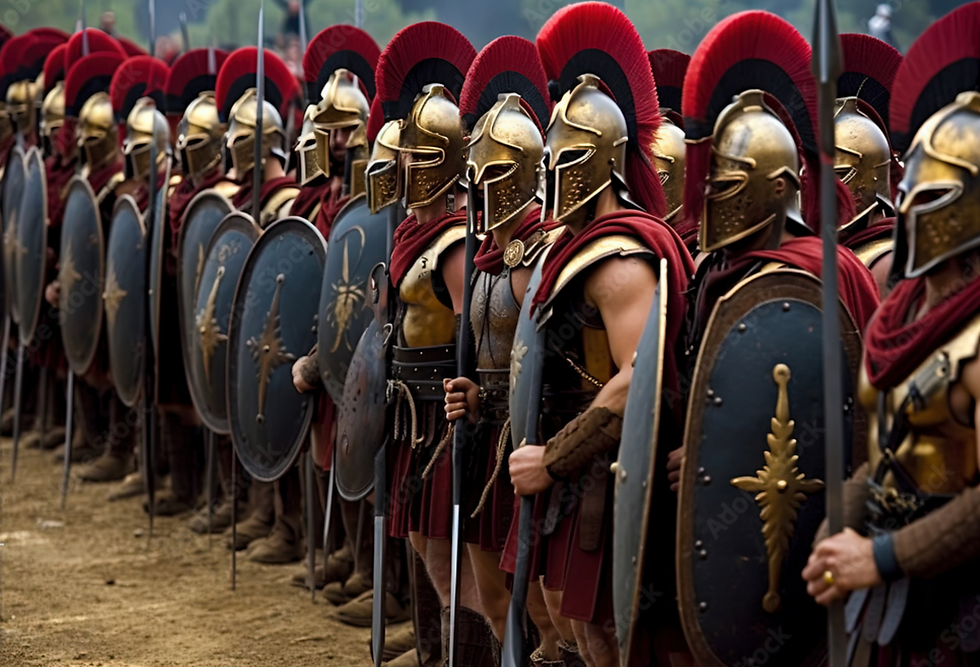
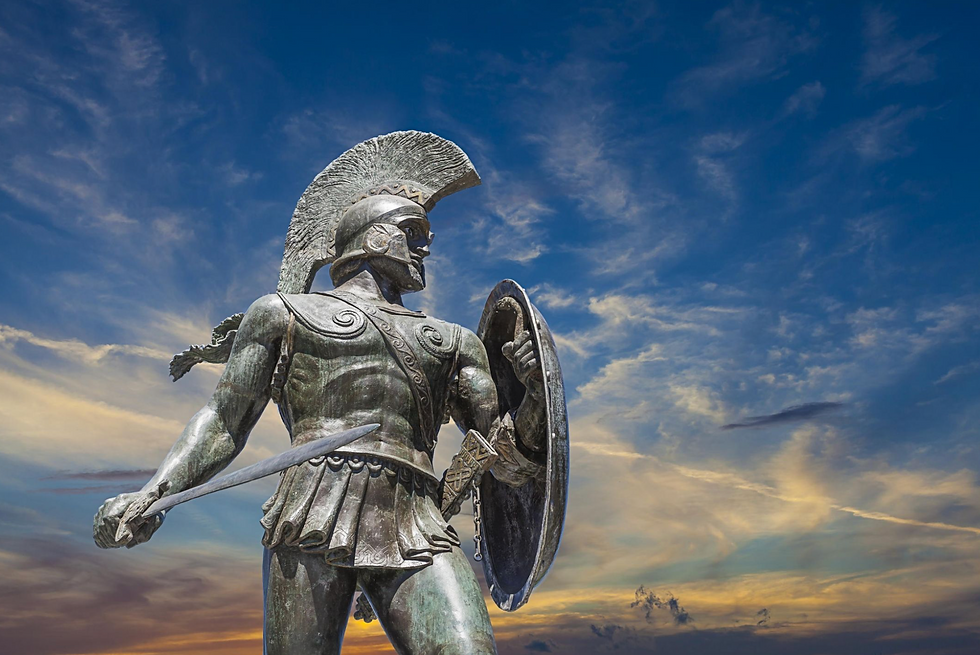
The movie 300 glorified Sparta and the Battle of Thermopylae—and rightly so. It was an astonishing achievement and a critical moment in defending Western civilization from despotism. But Sparta’s deeper history is darker. Before Sparta became the formidable war machine we know today, it was just like any other Greek city-state: a center of art, music, poetry, and civic life. Spartan women danced in festivals, poets like Alcman composed sensuous verses, and Sparta traded openly with other Greek cities. Sparta was not born tyrannical—it became tyrannical, and the cause was one word: fear.
During the 8th century B.C., Sparta fought two major wars with Messenia. These were existential conflicts. After a long and brutal struggle, Sparta conquered Messenia. Normally after such a war, boundaries would be redrawn and a truce established. But Sparta did the unthinkable: they enslaved the entire Messenian population. The Messenians outnumbered them nearly seven to one. Overnight, Sparta found itself ruling over a vast internal enemy—the helots.
This changed everything. Sparta became a militarized society not out of love of war but out of blind terror. They murdered helots to instill fear. They created the Agoge, a harsh training system beginning at age seven to turn boys into instruments of state violence. They created the Krypteia, a secret police force that roamed the countryside killing any helot who seemed rebellious. They expelled foreigners, suppressed foreign ideas, and transformed themselves into an insular, paranoid, xenophobic society. Their free city became a barracks. They committed civilizational suicide. In the end, Sparta fell not from outside enemies but from its own fear.
AMERICA’S MESSENIAN MOMENT
The year is 1968. The American Left is in open rebellion against the Johnson Administration. This is the year the old system broke—not slowly, but abruptly. Once a minority, the Left now captured the universities, the media, the school boards, and eventually the federal and state bureaucracies. It was not unlike Sparta finding itself suddenly in control of a nation many times its size.
The university revolutions began at Berkeley in 1964 and exploded nationwide within four years. Students found weakness everywhere. Administrators surrendered. At Columbia, students kidnapped a dean, occupied buildings for a week, and held mock trials. Activists rewrote the curriculum. The academic purge followed. Western Civilization courses, Shakespeare requirements, classical philosophy, art history, and ancient languages were abolished. Grievance studies, identity-based programs, post-colonial theory, Marxist sociology, feminist departments, and “critical” everything filled the vacuum. The ideological colonization had begun.
Dissenters disappeared. Graduate degrees required internalizing Leftist ideology. The government bureaucracy expanded dramatically between 1970 and 2010, staffed overwhelmingly by white liberal women and leftist graduates. Newsrooms transformed. The old working-class reporter was replaced by Ivy-League journalists and activists posing as reporters. HR departments exploded, becoming the enforcement arm of the new ideological order. Schools replaced civics with climate doom, systemic racism, gender ideology, and a permanent state of political hysteria.
The occupation was accompanied by a police-state mentality. Dissension was not allowed in classrooms; parents were silenced at school board meetings. FBI surveillance of Catholics, IRS pressure on religious groups—the Left used tools of state power to enforce ideological compliance. American society ceded ground the way university administrators did in the 1960s: silently, limply, fearfully.
Enter Donald Trump. Trump was not like previous Republicans. Reagan spoke about abolishing the Department of Education but did nothing. The CIA grew even more powerful in the ensuing years. Clinton, once a 1960s radical, became President. The Left’s ideology now had deep roots; socialists openly identified as socialists.
Trump and his followers were the helots—the “deplorables”—tired of low wages, imported labor, cultural mockery, and institutional contempt. Shame did not work on Trump or on them. For the Left, their opposition was mortal terror. Their reaction to Trump has been hysterical not because he threatens democracy—he does not—but because he threatens their grip on power. He threatens to expose the ideological occupation embedded in federal and state bureaucracies. He threatens to break the apparatus of fear and exclusion they spent fifty years building.
For America, this is liberation. For the Left, it is the beginning of the end of their occupation. And they know it.


Comments